
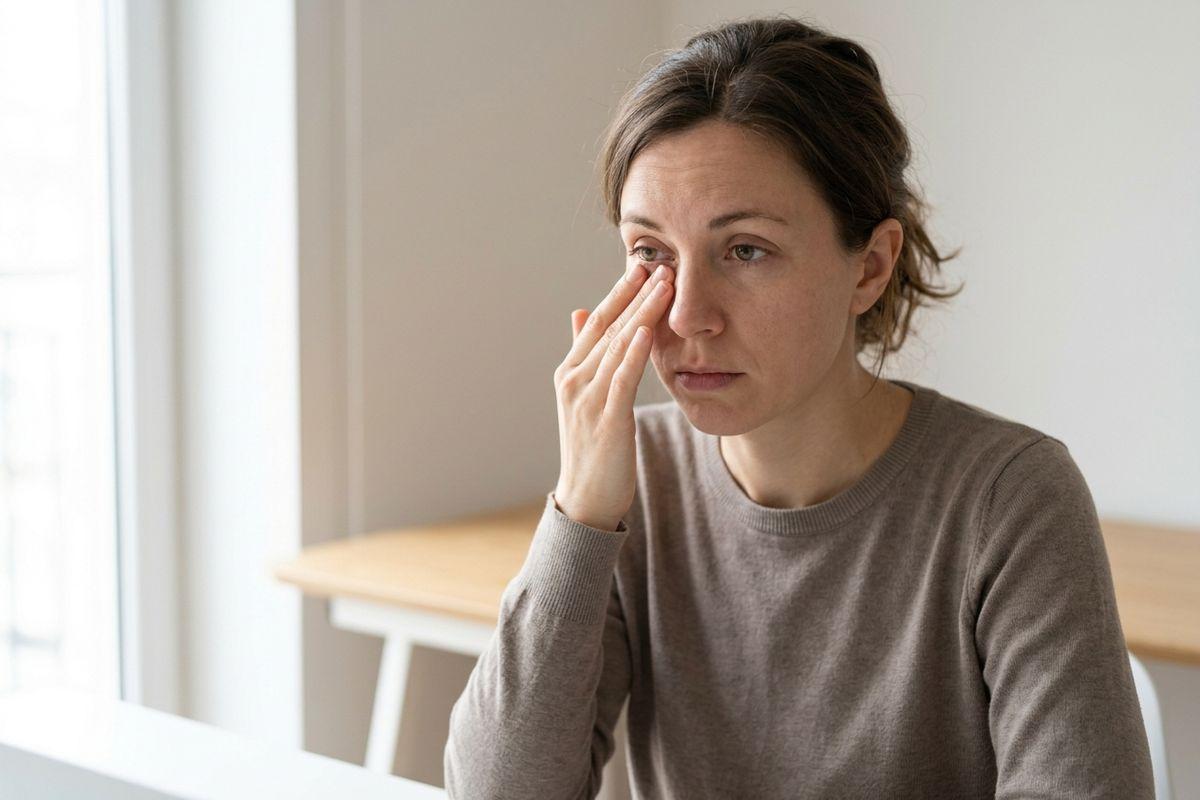
A twitching eyelid starts without warning, and pressing on it or blinking hard rarely makes a difference. Many people notice it alongside dry, gritty eyes at the end of a long day.
Most eye twitching traces back to ordinary things like short sleep, stress, caffeine, long stretches of screen time, and a dry or irritated eye surface. It usually settles on its own, sometimes within minutes, sometimes over several days.
If the flutter keeps coming back, book a comprehensive eye exam so an optometrist can assess what’s happening on the surface of your eye.
What Eye Twitching Actually Is
An eye twitch is an involuntary flutter of the upper or lower lid. The muscle fires without any input from you, which is why willing it to stop so rarely works.
Optometrists call the common, mild version myokymia. It comes and goes without affecting your vision, and it tends to resolve without treatment.
It almost always feels bigger than it looks. You may sense a strong tug near your lash line while the person across the table sees nothing at all.
Why Just One Eye Twitches
One-sided twitching is common and rarely means something is wrong.
Irritation often affects one lid but not the other, so one eye may flutter while the other stays still.
Everyday Factors Behind a Twitchy Eyelid
Think back over the days before the twitching started. A short night or a demanding stretch at work often lines up with the timing.
Several common factors can set one off:
- Several short nights of sleep in a row
- Stress that hasn’t eased off
- More caffeine than usual, especially an extra coffee in the afternoon
- Alcohol or nicotine
- Long screen sessions and the digital eye strain that follows
What Can Irritate Your Eye
Your eye surface relies on a steady tear film to stay comfortable. When that film thins, such as with dry eye, the muscles around your lid can get irritated.
Allergies do the same thing, and so does blepharitis, an inflammation along the lash line that leaves the area red and itchy.
Cold wind pulls moisture off the eye surface quickly, so a walk in January can leave one lid fluttering for the rest of the afternoon. Bright light adds to the strain.
Contact lenses worn past their replacement date can irritate the surface too. So can sleeping in a room with the heat cranked up, since forced air dries out both the room and your eyes overnight.
Less Common Reasons Worth Knowing
Some conditions produce something stronger than a light flutter. These are the sort of conditions where it may be worth letting your optometrist know that something is going on:
- Blepharospasm, which involves forceful blinking and usually affects both eyes
- Hemifacial spasm, which pulls at the lid and cheek on one side of the face
- Certain medications, including some prescribed for Parkinson’s disease
- Ongoing surface irritation from an untreated eye condition

Nerve and Brain Conditions
These are rare, and they almost always show up alongside other symptoms rather than on their own.
Twitching by itself rarely points to serious disease, so a fluttering lid is not a reason to assume the worst. Ongoing eye disease diagnosis and management can track anything that needs watching.
Ways to Settle a Twitch at Home
A few small changes over a couple of weeks are often enough:
- Aim for 7 to 9 hours of sleep on a consistent schedule.
- Cut your caffeine in half for 2 weeks and see what changes.
- Follow the 20-20-20 rule by looking 20 feet away for 20 seconds every 20 minutes.
Preservative-free artificial tears used throughout the day can keep the eye surface comfortable. A warm or cool compress for 5 to 10 minutes can help too, and it’s easy to do during a screen break.
Evidence for supplements helping eye twitches is limited. Bring them up at your next appointment before you spend money on them.
Signs It’s Time to Book an Exam
A twitch that lasts an afternoon is fine to wait out. Book an appointment sooner if you notice any of the following:
- Twitching that continues past 2 to 3 weeks
- An eye that closes forcefully on its own
- Spasms spreading to other parts of your face
- Pain, redness, or a drooping lid
- Any change in your vision
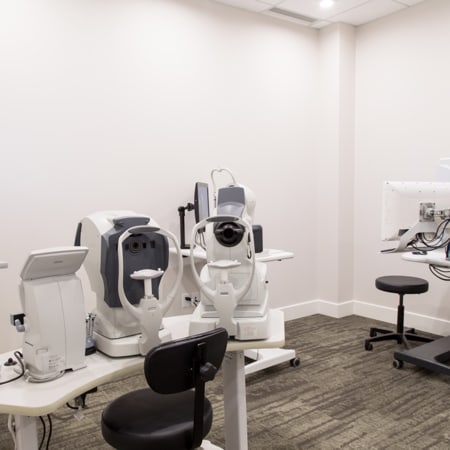
At the appointment, your optometrist examines your eye surface for dryness and irritation, then asks about the habits and symptoms you’ve noticed. Most exams take less time than people expect, and you leave with a plan built around what your own eyes are dealing with.
Get to the Root of the Twitch
Most people find a twitchy lid more annoying than worrying, and that’s usually the right read. But it can also be what finally gets your eyes checked properly.
If you’re concerned about your eye health, whether that’s a twitch or dryness, we’re here to help. Book an appointment with Central Optometry and let an optometrist take a closer look at what’s behind the flutter.