
Key Takeaways
- A visual field test measures how wide and sensitive your vision is when you look straight ahead.
- It can detect blind spots linked to glaucoma, optic nerve disease, retinal conditions, and neurological problems.
- Testing time varies by method and clinical need. The field test itself does not require dilation, although other parts of an eye exam may.
- Repeat testing tracks whether vision changes are stable or progressing over time.
- Central Optometry offers visual field testing as part of thorough eye exams in London, ON.
What Your Side Vision Can Tell You
You probably focus on what’s directly in front of you without thinking much about what’s happening at the edges of your vision. But that side vision matters more than you might realize. When it starts to fade quietly, you often don’t notice until it’s already changed significantly.
A visual field test maps out the full range of what your eyes can see, checking both the width of your vision and how well you detect light across that entire area. It’s one of the tools a Central Optometry eye doctor uses to catch early signs of vision problems that don’t always show obvious symptoms at first. Visual field testing is often included as part of comprehensive eye exams in London, ON when the doctor feels it’s appropriate for your eye health history.
What a Visual Field Test Measures
Think of your visual field as everything you can see without moving your eyes. The test checks two main things: how far out to the sides your eyes can detect, and how sensitive your vision is at different points across that range.
It also looks for scotomas, which are blind spots in your central or side vision. These gaps can be subtle at first. Your brain tends to fill them in automatically, which is part of why they often go unnoticed without formal testing. Catching them early gives you and your eye care team the information needed to act on changes before they get bigger. Visual field testing uses several different methods to measure these blind spots accurately, depending on what the doctor is monitoring.
Who Needs a Visual Field Test
Conditions That Call for Testing
Not every eye appointment includes a visual field test, but certain situations make it a key part of your care. The doctor may recommend one if you’re managing or monitoring any of the following:
- Glaucoma, optic nerve disease, or selected retinal conditions
- Neurological conditions like a stroke or tumour that affects vision
- Long-term use of certain medications, such as hydroxychloroquine
Each of these conditions can affect your visual field in specific ways. Testing helps confirm whether changes are happening and where they’re showing up. If you’re concerned about eye disease diagnosis and management, visual field testing is one part of how the team monitors your eye health over time.
Why Repeat Tests Matter
A single test gives a snapshot. Repeat tests over time give a clearer picture.
If you’re managing glaucoma, an optic nerve disorder, or certain neurological or retinal conditions, follow-up visual field tests can show whether a defect is stable or changing. It also confirms whether a previous result was accurate, since things like fatigue or blinking at the wrong moment can affect your responses during testing. The test pattern and follow-up schedule are selected for the condition being monitored. Macular degeneration is usually followed with other tools, such as retinal imaging and an Amsler grid, although a clinician may order additional field testing when appropriate.
What Happens During a Visual Field Test
How the Test Works
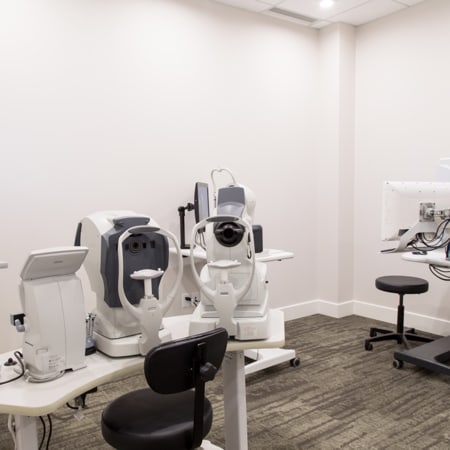
The equipment looks a little like a large white bowl on a stand. You sit with your chin resting on a support, cover one eye, and focus on a central point inside the bowl. Each time a small light flashes somewhere in your field of view, you press a button.
It’s straightforward, but it does take some focus. Each eye is tested separately. A screening test may be brief, while a detailed threshold test can take longer. The results map out exactly where your vision responded and where it didn’t. If you’re curious about what else happens during an appointment, this breakdown of how long an eye exam takes covers what to expect from start to finish.
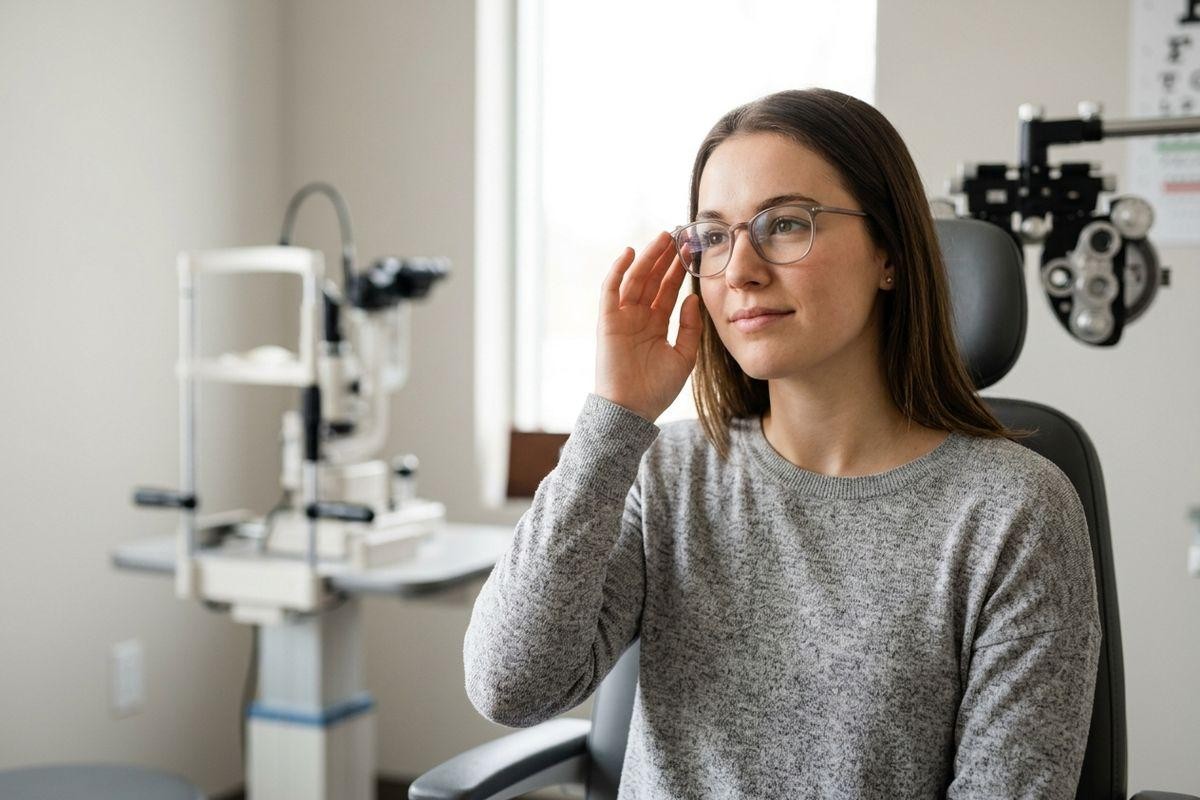
Adult patient seated in an eye exam room, adjusting glasses with one hand, slit lamp and phoropter visible in background.
Types of Visual Field Tests
There are a few different ways this testing can be done, depending on what the doctor is looking for:
- Confrontation test: a quick in-office screen where you identify fingers held at different points in your visual field
- Automated static perimetry: a detailed map created by a machine using a series of blinking lights at set locations
- Amsler grid: a separate home-monitoring tool for central distortion or missing areas, often used in AMD care; it is not a substitute for formal automated perimetry
How to Prepare for a Visual Field Test
There is usually little preparation for a visual field test. The test itself does not require dilation, but your broader appointment may include dilating drops. Ask the clinic in advance if driving or post-exam blur is a concern.
A few practical things to keep in mind:
- Bring your glasses and follow the clinic’s instructions about which correction to wear during testing
- Try to book when you feel alert, since fatigue can slow your reaction time and affect accuracy
Wearing the right prescription during testing helps produce the most accurate results. You can book your eye exam appointment online and review any relevant appointment details before your visit.
What Your Results Mean and What Comes Next
After the Test
Once the test is complete, the doctor reviews the results and walks you through what the findings show. You don’t leave wondering what the numbers mean. If the results point to a concern, a care or monitoring plan is arranged based on your specific situation.
Book a Visual Field Test in London, ON
Visual field testing is available as part of a thorough eye exam at Central Optometry in London, ON. It may be recommended for people with glaucoma, optic nerve or neurological concerns, certain retinal conditions, or medications that require field monitoring. Your optometrist will select the test and schedule based on your history and results.
If you’re due for an eye exam or have concerns about changes in your vision, book your appointment with Central Optometry online. The team takes the time to understand your needs and make sure your care reflects what’s actually happening with your eyes.