Key Takeaways
- Diabetes can damage the nerves that control eye movement, potentially leading to double vision.
- Symptoms can appear suddenly and may shift with blood sugar levels.
- Many cases improve with better blood sugar control and monitoring.
- Prompt eye exams help catch diabetes-related changes early.
- A London, Ontario, optometrist can assess and manage these changes.
You might notice something feels off with your vision and not immediately connect it to your diabetes. That disconnect is actually very common. Some of the changes diabetes brings to your eyes happen slowly, with no obvious warning signs in the early stages. Diabetic eye exams are designed specifically to catch those changes before they become harder to manage.
Yes, diabetes can cause double vision. When blood sugar stays high over time, it can damage the small blood vessels and nerves throughout your body, including the ones that control how your eyes move and focus. Double vision is one of the more noticeable ways that damage can show up.
The Link Between Diabetes and Double Vision
What Happens in the Eye
Your eyes are each controlled by a set of muscles. Those muscles take direction from nerves. When diabetes-related nerve damage disrupts that communication, one eye may not move in sync with the other. Your brain then receives two separate images instead of one, and that’s what you experience as double vision.
It can feel disorienting, especially if it comes on suddenly.
Which Nerves Are Involved
Three cranial nerves handle eye movement: nerves 3, 4, and 6. Diabetes-related damage can affect any one of them. Nerve 3 is the most commonly involved and controls several eye muscles at once, so damage there tends to cause the most noticeable symptoms. But changes to nerves 4 or 6 can also shift how well your eyes track together. Diabetes affects eye health in several ways beyond double vision, including increased risks for cataracts and glaucoma.
Signs That Diabetes May Be Affecting Your Vision
Double vision is one sign, but it’s not the only one. If diabetes is starting to affect your eyes, you might notice a few different things. Watch for any of these changes, especially if they appear suddenly or get worse over time:
- Sudden blurry vision in one or both eyes
- Trouble focusing while reading, driving, or using a screen
- Vision that seems to shift or fluctuate alongside your blood sugar levels
Vision that changes with blood sugar is worth paying attention to. It can be a sign that your eyes are responding to fluctuations in a direct, measurable way.
Typical Recovery Timeline
The timeline varies from person to person, but many cases of double vision caused by diabetes improve within a few weeks to a few months. Getting your blood sugar into a more stable range can support that process. The nerve involved does have some capacity to recover, and better overall diabetes management tends to support that recovery.
Common Ways to Manage Symptoms
While you’re waiting for things to settle, there are practical options that can make day-to-day life more comfortable, including:
- An eye patch worn over one eye can reduce the confusion your brain experiences from two competing images.
- Prism lenses, which are a type of specialty lens that bends light to align the images your eyes send, can help reduce double vision during daily tasks.
- Regular check-ins with an eye doctor help track whether things are improving or whether further assessment is needed.
Tools like Neurolens prism lenses are one example of how specialty eyewear can address alignment issues that affect your daily comfort and clarity.
When to See an Eye Doctor in London, ON
Sudden double vision isn’t something to wait on. It can point to several conditions, including diabetes-related nerve changes, so getting it checked promptly matters.
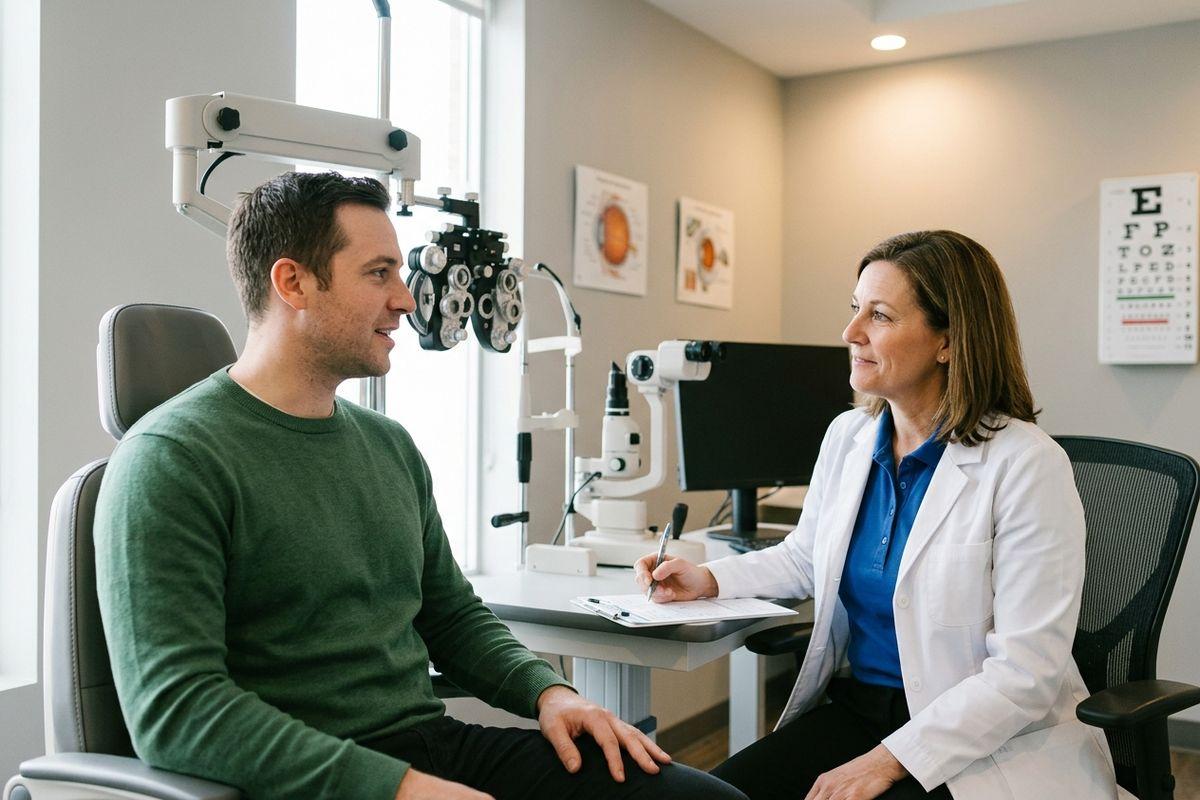
If you have diabetes and notice any shift in your vision, an eye exam in London, ON, is a practical next step. At Central Optometry, our team can assess how diabetes may be affecting your eyes, look for early signs of diabetic eye disease, and help you stay on top of your eye health between medical appointments.
Eye exams for people with diabetes go beyond checking your prescription. They’re an opportunity to catch changes early and keep your vision on track.
If double vision or any other vision change has you concerned, contact us to schedule your eye exam.