


Watery eyes are a frustrating issue that can disrupt your daily activities and make simple tasks like reading or driving uncomfortable. Not only that, they’re more common than most people realize and can happen for a number of different reasons. Even dry eye could be to blame.
Watery eyes happen when your eyes produce more tears than your drainage system can handle, or when something is blocking that drainage from working properly. A comprehensive eye exam could help you understand what’s going on, making it much easier to figure out the right way to get relief.
Why Your Eyes Produce Tears
Your eyes need a steady layer of tears to stay comfortable and see clearly. Small glands under your eyelids constantly produce a mix of water, salt, and oils that coat the surface of your eye. This layer keeps the eye hydrated and flushes away dust or debris throughout the day.
When an issue upsets this balance, your eyes may produce too many tears or too few. Your tears then spill out instead of draining through the small ducts at the corner of your eye.
Common Causes of Watery Eyes
Several different factors can throw off your tear balance and lead to watery eyes throughout the day:
Dry Eyes and Irritation
It might seem counterintuitive, but dry eyes are one of the most frequent reasons eyes water. When your eyes feel dry or scratchy, your body responds by flooding them with tears to compensate. The problem is that these reflex tears don’t have the right balance of oils and water to stay on the eye surface, so they may evaporate too fast.
This watering tends to come and go, especially after screen time or in dry indoor environments. Fortunately, a proper assessment and a tailored care plan can help you manage your dry eye symptoms.
Environmental and External Factors
Wind, cold air, bright sunlight, and dust can irritate your eye surface and trigger excess tear production. Your eyes are trying to protect themselves, so the watering is a completely natural response to your environment.
Seasonal allergies, colds, and sinus congestion can also lead to watery eyes. When your sinuses are blocked, it can slow down tear drainage, causing tears to build up and overflow even when there’s no direct irritation to the eye itself.
Eye Infections and Inflammation
Pink eye, also called conjunctivitis, causes redness and irritation that often comes with a lot of tearing. Blepharitis, which is inflammation along the eyelid edges, can do the exact same thing. Both conditions disrupt the normal tear film and cause your eyes to produce more tears.
A foreign object in the eye, like a small piece of dust or debris, or even exposure to a chemical irritant, can also bring on a strong tear response. In those cases, watering is your eye’s way of flushing out the problem.
Watery Eyes in Different Age Groups
The reasons behind excess tearing can vary quite a bit depending on your stage of life:
In Babies & Children
In newborns and young babies, watery eyes are often linked to a blocked tear duct. The small channels that drain tears from the eye to the nose sometimes don’t fully open in the early months of life. This leads to constant tearing and sometimes a mild discharge in the corner of the eye.
Most blocked ducts in babies open on their own within the first year. Schedule a children’s eye exam if the watering continues or causes discomfort to rule out any other concerns.
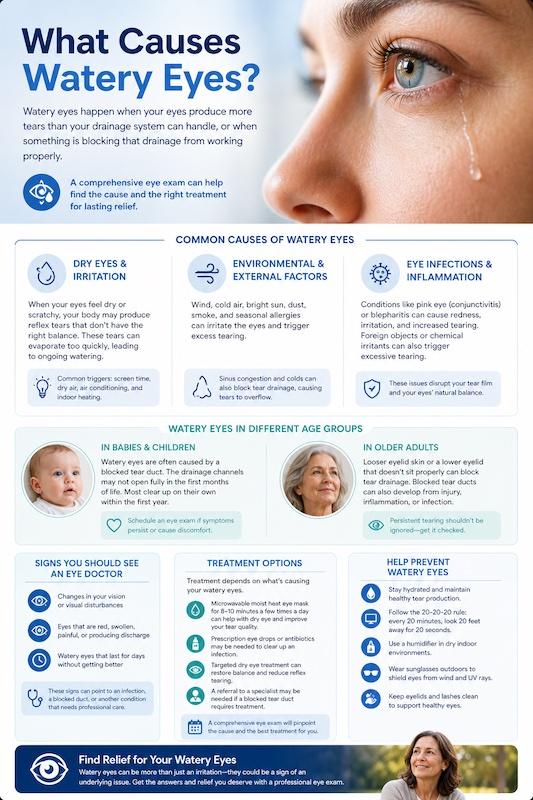
In Older Adults
As you get older, the skin around your eyelids can loosen and sag. When this happens, the lower eyelid may not sit flush against the eye the way it should, making it harder for tears to drain properly. The result is a constant feeling of watery eyes that doesn’t seem to have an obvious cause.
Blocked tear ducts can also develop later in life from an old injury, inflammation, or infection.
Signs You Should See an Eye Doctor
Watery eyes from a bit of wind or dust usually settle down on their own. But some symptoms point to something that needs a closer look from a professional. Keep an eye out for:
- Changes in your vision or visual disturbances
- Eyes that are red, swollen, painful, or producing discharge
- Watery eyes that last for days without getting better
These signs can point to an infection, a blocked duct, or another condition that responds well to early care. The sooner you get it checked, the more comfortable your eyes can feel.
Treatment Options for Watery Eyes
For mild watering linked to irritation or dry eye, apply a microwaveable moist heat eye mask to your closed eyes for 8-10 minutes a few times a day. The warmth helps melt the thickened oils in your meibomian glands, which improves how your tears spread across the eye surface and reduces reflex tearing.
When at-home steps aren’t enough, a few treatment options are available, depending on what’s causing the watering. These can include:
- Prescription eye drops or antibiotics to clear up an infection
- Targeted dry eye treatment to address the root imbalance
- A referral to a specialist if a blocked tear duct needs to be opened or repaired
Book a comprehensive eye exam to pinpoint the exact reason your eyes are watering, so you know which approach will actually help.
Find Relief for Your Watery Eyes
Watery eyes can have a lot of different causes, which is why guessing at the fix usually doesn’t work for long. A proper exam can pinpoint whether dry eye, allergies, blocked drainage, or something else is behind your symptoms, and the treatment plan looks different for each.
If your eyes have been watering more than usual and you’re tired of dealing with it, our team at Central Optometry can figure out what’s actually going on. Book an eye exam and we’ll put together a plan that fits what your eyes are telling us.