
You might notice words on a page becoming harder to read, or straight lines starting to look wavy when you look at them directly. These changes in your central vision could signal age-related macular degeneration (AMD), a condition that affects millions of people over 50. If you’re experiencing these symptoms, Central Optometry can provide comprehensive evaluation and specialized care to help protect your vision.
Age-related macular degeneration comes in two main forms — dry AMD, which develops slowly over years, and wet AMD, which can progress rapidly and needs immediate treatment. Understanding the differences between these two types helps you recognize when changes in your vision need prompt attention from an AMD Centre of Excellence.
What Age-Related Macular Degeneration Does to Your Vision
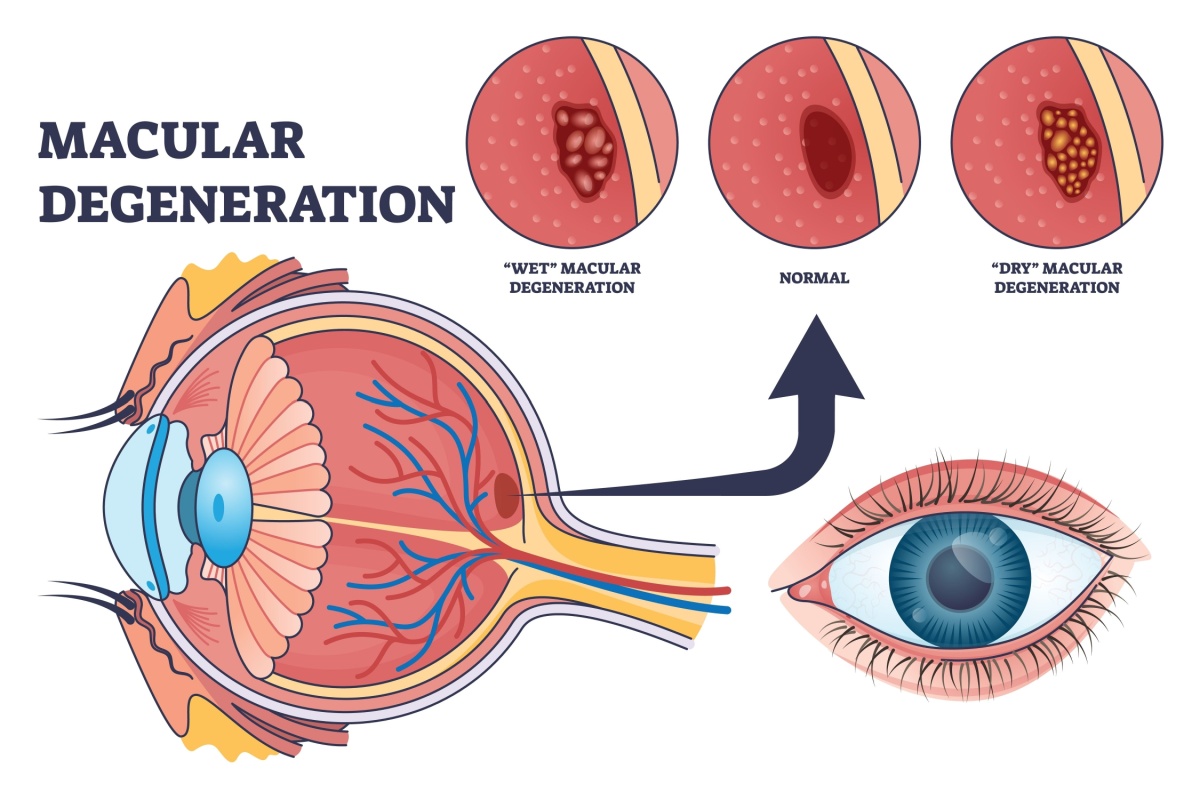
AMD targets the macula, a small but important part of your retina that handles your sharp, central vision. When this area gets damaged, you lose the clear vision you need for activities like reading street signs, recognizing faces, or threading a needle.
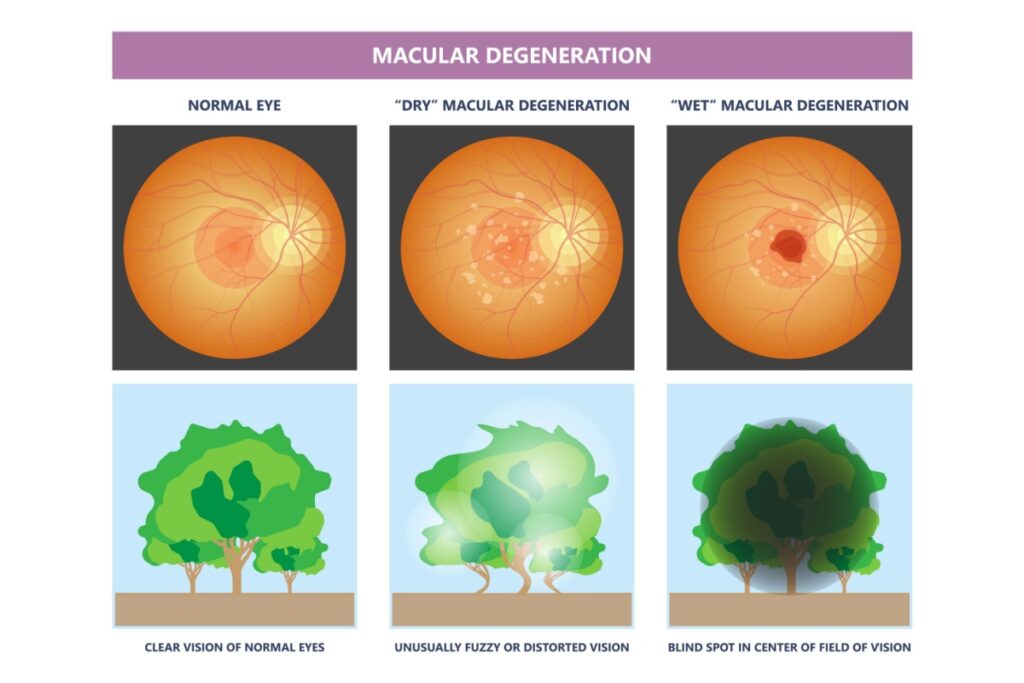
Your side vision typically stays normal with AMD. However, the central vision loss can make everyday tasks challenging. You might find yourself holding books at arm’s length or needing brighter lights to see details clearly.
This condition becomes more common as you age, especially after 50. Your risk increases if you have a family history of AMD, smoke, or have cardiovascular disease.
How Dry AMD Affects Your Eyes
What Happens with Dry AMD
Dry AMD develops when small yellow deposits called drusen accumulate under your retina. Think of drusen like dust collecting under furniture. Over time, these deposits can interfere with your macula’s normal function.
This form of AMD progresses gradually. You might not notice vision changes for months or even years. The slow progression means you often have time to adapt and seek treatment before significant vision loss occurs.
Signs You Might Notice
The early symptoms of dry AMD can be subtle. You might first notice that colours seem less vibrant or that you need more light to read comfortably.
As the condition progresses, you may experience:
How Wet AMD Differs from the Dry Form
What Makes Wet AMD Different
Wet AMD happens when abnormal blood vessels begin growing under your retina. These new vessels are fragile and poorly formed, like weeds growing through cracks in a sidewalk.
These vessels leak blood and fluid into your macula, creating swelling and damage to your retinal tissue. The leaked fluid disrupts your normal vision processing, creating distortions and blind spots in your central vision.
Why Wet AMD Needs Quick Attention
Unlike dry AMD, wet AMD can affect vision within days or weeks. The leaking blood vessels can quickly damage delicate retinal cells that don’t regenerate once they’re lost.
This rapid progression affects your daily life immediately. You might suddenly have trouble reading, cooking safely, or driving. The sooner you receive treatment, the more vision the doctor can help preserve.
Treatment Options Available in London, Ontario
While no treatment can reverse dry AMD, several approaches can help slow its progression and potentially improve visual function.
AREDS2 Vitamins
The Age-Related Eye Disease Study 2 (AREDS2) formula contains specific vitamins and minerals shown to reduce the risk of dry AMD progressing to advanced stages. This formula includes vitamin C, vitamin E, zinc, copper, lutein, and zeaxanthin. Your optometrist can recommend whether AREDS2 supplementation is appropriate for your condition.
MacuMira Microcurrent Stimulation Therapy
Central Optometry offers MacuMira treatment, the first Health Canada-approved device designed to improve visual function for dry AMD patients. MacuMira uses microcurrent stimulation to support retinal health through gentle electrical currents delivered while you wear a comfortable headset device.
Clinical trials showed 100% of treated patients experienced improved visual function, with an average improvement of 8.2 letters on the ETDRS visual acuity chart. Treatment involves 6 sessions over 30 weeks, with each painless session lasting approximately 30 minutes. No injections, medications, lasers, or surgery are required.
Regular Monitoring
Once you have dry AMD, regular eye exams become essential. These exams track any changes in your condition and catch early signs if dry AMD progresses to the wet form. Your optometrist may recommend more frequent monitoring if your condition shows signs of advancement.
At Central Optometry, the team implements modern technology and treatments for patients with AMD. The AMD Centre of Excellence designation means you have access to coordinated care and treatment options right here in London Ontario.
When to Schedule Your Eye Exam with Central Optometry
Regular eye exams become more important as you age, especially after 50. Annual comprehensive exams can detect early signs of AMD before you notice vision changes, giving you the opportunity for early intervention.
Don’t wait for your next scheduled appointment if you notice sudden changes in your vision. New symptoms like wavy lines, dark spots, or sudden blurriness need immediate evaluation to determine if you’re developing wet AMD.
If you have risk factors for AMD — such as family history, smoking history, or cardiovascular disease — more frequent monitoring can help catch changes early. Central Optometry provides personalized care plans based on your individual risk factors and vision needs.