
When your eyes constantly feel gritty, irritated, or watery, it often means your tears are not working properly. A healthy tear film is essential for clear vision and comfort. When that balance is disrupted, you’re left dealing with persistent dry eye symptoms throughout your day.
Intense Pulsed Light, or IPL, is a treatment that uses gentle, filtered light to address a root cause of dry eye by helping restore the function of the oil glands in your eyelids. This approach can provide noticeable and lasting relief by improving your natural tear quality.
Understand the Root Cause of Your Dry Eye
To see how IPL helps, it’s useful to first know why your eyes feel so uncomfortable. The problem often starts with the tiny glands in your eyelids that are responsible for keeping your eyes lubricated.
The Role of Tear Film & Meibomian Glands
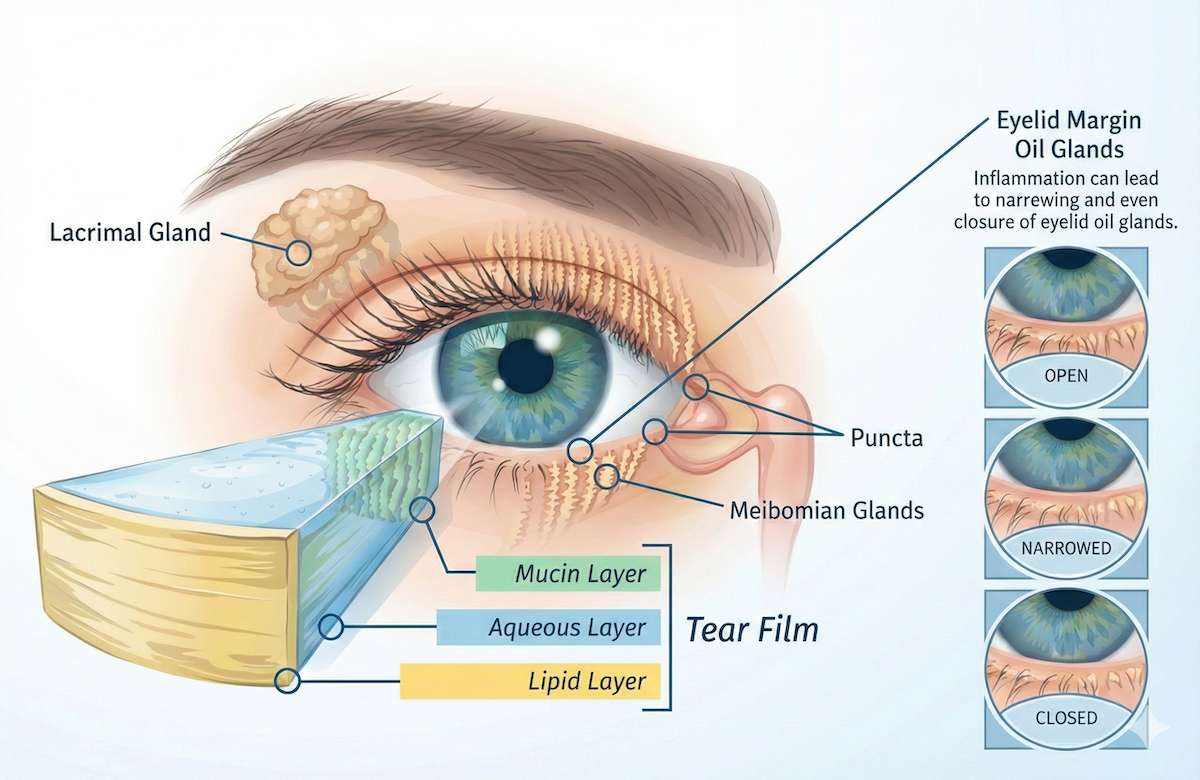
Your tears have three layers, and the oily outer layer is very important. It creates a smooth surface and prevents your tears from evaporating too quickly. Small glands along your eyelids, called meibomian glands, produce this oil.
What Is Meibomian Gland Dysfunction?
Many people experience dry eyes because of Meibomian Gland Dysfunction, or MGD. This condition occurs when the meibomian glands get clogged with hardened oil. When the oil cannot flow freely, your tear film becomes unstable, leading to the familiar discomfort of Dry Eye Syndrome.
Signs of Dry Eye Disease
- A scratchy or gritty feeling
- Redness and irritation
- Watery eyes
- Blurry vision that comes and goes
- Sensitivity to light
What Is Intense Pulsed Light & How Does It Work?
IPL is a therapy that addresses a key cause of evaporative dry eye. It uses a specific technology to help get your eyelid glands working properly again, which can help your eyes feel much better.
A Gentle Light-Based Treatment
During an IPL session, precise pulses of filtered light are applied to the skin around your eyes. This technology has been used safely in dermatology for years and is adapted specifically for the delicate eye area.
How Light Energy Helps Your Eyes
The light energy works in a few helpful ways. It gently warms your eyelids, which helps melt the thick oil clogging your meibomian glands. The light also helps reduce inflammation and can address the small blood vessels often seen with conditions like ocular rosacea, which can contribute to dry eye symptoms.
Your IPL Treatment Journey
If you are looking for an effective dry eye treatment in London, the team can determine if IPL is a suitable option for you. The process starts with a thorough evaluation to understand your specific eye health needs.
Start with a Comprehensive Dry Eye Assessment
Your journey begins with a detailed assessment of your eyes. The optometrist carefully looks at your meibomian glands and tear film quality. This step helps confirm if MGD is causing your symptoms and allows for the creation of a personalized treatment plan.
What to Expect During Your Session
The IPL treatment itself is a straightforward procedure performed in the office. Here’s what you can generally expect:
- Your eyes are protected with special shields.
- A cooling gel is applied to the skin around your eyes for comfort.
- A small device delivers quick pulses of light to the treatment areas.
- After the light treatment, the optometrist may gently express oil from the glands to help clear any remaining blockages.

Your IPL Treatment Plan & Timeline
IPL offers gradual, cumulative improvement. A clear treatment schedule helps you know what to expect on your path toward lasting relief from dry eye symptoms.
How Many Sessions Will You Need?
A typical treatment plan involves a series of about four sessions. These appointments are usually spaced three to four weeks apart to allow your glands to respond and heal. Your eye doctor can recommend a schedule based on your initial assessment.
When Can You Expect to Feel Relief?
Many people start to notice an improvement in their symptoms after just one or two treatments. The full benefits often become more apparent after the complete series is finished, as your glands gradually return to healthier function.
Maintain Your Comfort with Follow-Up Care
After your initial series of treatments is complete, your eye doctor may recommend a single maintenance session every six to 12 months. This helps keep your meibomian glands functioning well and your symptoms under control long term.
A Complete Approach to Dry Eye Care
While IPL is a powerful tool for managing MGD, it is often most effective as part of a complete care plan. The goal is to provide a comprehensive solution that brings you lasting comfort.
IPL as Part of Your Personalized Plan
IPL works well on its own, but it’s often even more effective when combined with complementary treatments. Your optometrist will create a plan based on the specific causes of your dry eye, which might include addressing both gland dysfunction and other contributing factors like inflammation or environmental triggers.
Combine with Other Dry Eye Treatments
For some people, combining IPL with other treatments like LipiFlow thermal pulsation, specific nutritional supplements, or at-home eyelid hygiene can produce even better results. This integrated approach helps address all the factors that contribute to your discomfort.
If you are tired of the constant irritation of dry eyes, a personalized treatment plan can make a difference. Contact Central Optometry to schedule a comprehensive dry eye assessment and find out if IPL is the right solution for you.